
Services
Vent Rerouting & Replacement
Unsafe plastic or foil flex lines replaced with smooth rigid metal, and badly routed runs re-plumbed shorter, straighter and safer.
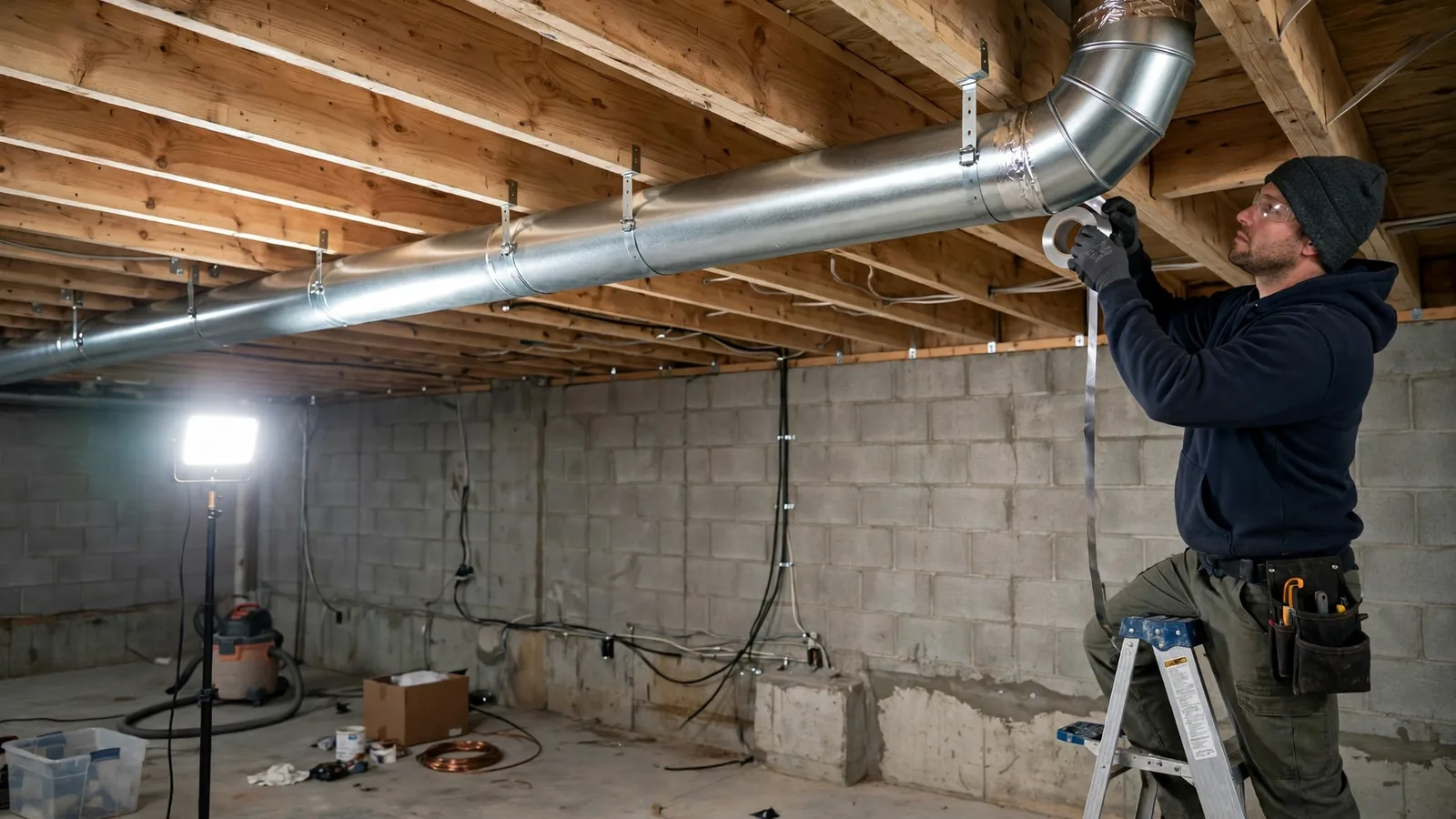
Some vent lines were wrong the day they were installed: white plastic or thin foil flex that sags, kinks and traps lint in every rib; runs that wander 40 feet with five elbows; exits that dump moist air into an attic or crawl space. Cleaning helps a bad line for a while — replacing it fixes the problem at the root.
We design the run the way it should have been built: the shortest practical path, smooth rigid metal duct, gentle elbows, proper supports and a clean exit through a wall or roof cap with a working damper. Plastic and vinyl flex come out entirely. The result is a line that dries faster, stays cleaner far longer, and matches what fire-safety guidance and building codes actually call for.
What's included
- Plastic/vinyl and foil flex lines removed and replaced with rigid metal
- Runs re-planned for the shortest, straightest practical path
- Proper supports, sealed joints and code-friendly materials throughout
- Correct wall or roof exit caps with free-moving dampers
- Old, unsafe exit points (attic/crawl-space dumps) eliminated
Book Your Vent Cleaning
Tell us what you need and we'll call you back to confirm. Rather talk now? (855) 640-0404 — answered 24/7.
How it works
Our Process
Survey the run
We map the existing line — length, elbows, material, exit point — and measure the dryer's drying performance.
Plan the new path
You see the proposed route and materials before anything is cut, with a fixed quote for the whole job.
Remove & rebuild
The old line comes out; the new rigid run goes in with sealed, clamped joints and correct supports.
Test & document
Airflow is measured at the new cap, and we show you the old line's condition next to the new one.
Questions
Vent Rerouting & Replacement — FAQs
Its ribs trap lint, it sags into lint-collecting bellies, it crushes easily — and plastic/vinyl is flammable and not approved for dryer venting. Smooth rigid metal is the standard because it does none of those things.
Building codes commonly cap a run at about 35 feet, subtracting roughly 5 feet for every 90-degree elbow. Long homes often exceed the practical limit unknowingly — a booster fan or a smarter route is the fix, and we will tell you which.
On a long or kinked line, dramatically. Dryers are built to push air a limited distance; give them a short, smooth path and most 'tired' dryers act new again.
Yes — wall and roof terminations, with the right cap and damper for the exit type, sealed and flashed properly.